
Midterms Are Won on the Ground. Here's What That Actually Takes.
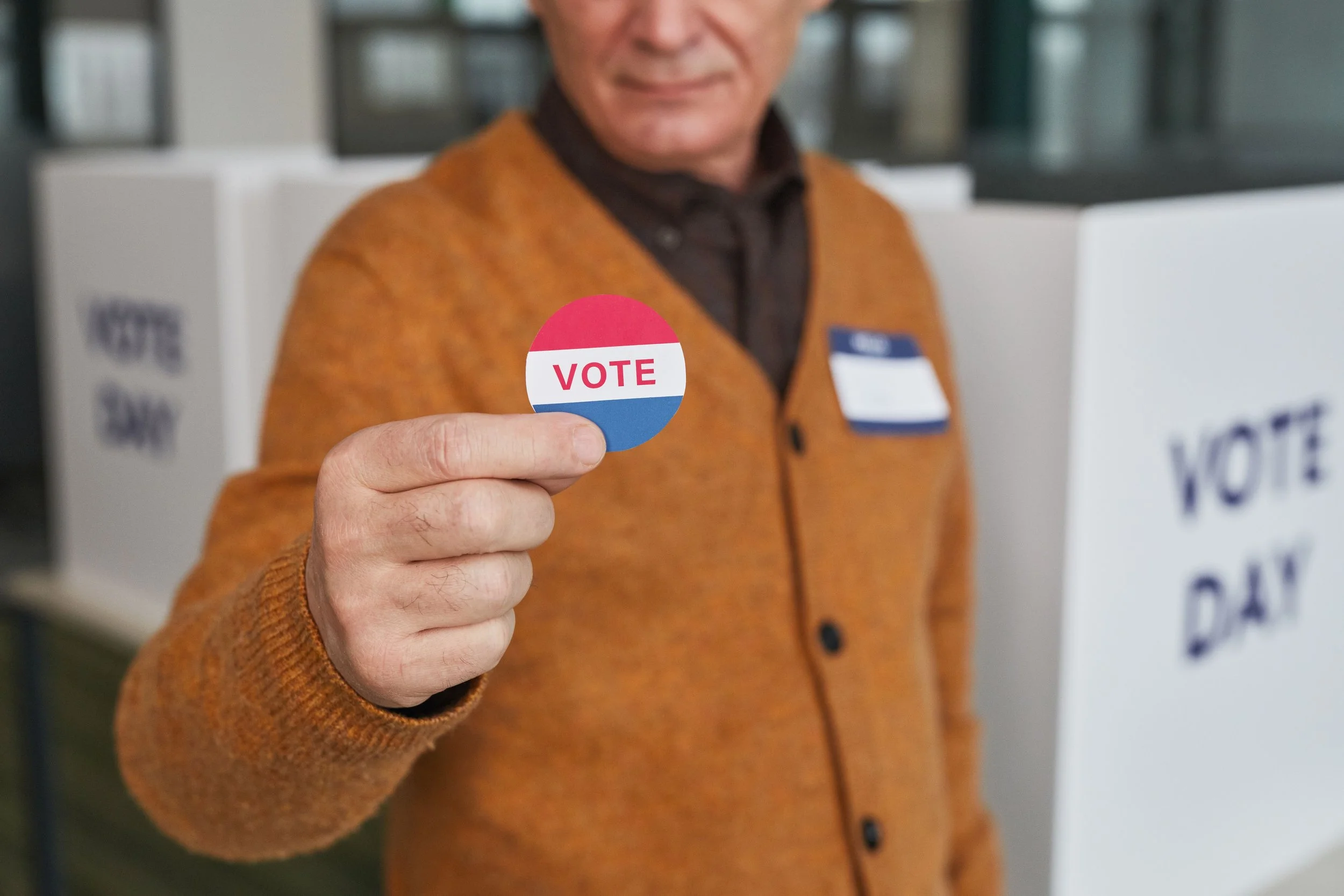
Without a presidential race pulling voters to the polls, campaigns have to go get them. That work looks a lot less glamorous than it sounds.
Every four years, the presidential campaign does an enormous favor for everyone below it on the ballot. It saturates television, dominates the news cycle, and drags voters to the polls who had no particular intention of going. Congressional candidates, state legislators, and county officials all benefit from turnout they never had to manufacture themselves.
Midterms take that away and leave behind a much harder problem. The electorate shrinks. It skews older, more partisan, and more habitual. The voters a campaign most needs are often the least likely to show up on their own, and no amount of paid media reliably moves them.
Field and mail carry far more weight in this environment than they do in a presidential year, and the margins explain why. Control of the House is decided by a handful of seats, and many of those seats are decided by a few thousand votes. Races that close tend to come down to whether a campaign identified specific people and got them to the polls.
A door tells you what a screen never will, and in a midterm you need that intelligence
A television ad reaches a household that may or may not be paying attention, and it tells the campaign nothing in return. A canvasser at the door accomplishes two things at once. The conversation happens, and the campaign learns something it did not know before.
That second part is what wins midterms. In a presidential year, a campaign can lean on national modeling and still be close enough, because the volume of voters papers over the error. In a midterm, the universe is small enough that a modeling mistake of even a few points across a district is the whole race. Every completed survey at the door corrects the model with something real. By October, the campaigns that knocked in August are working from a picture of their electorate that nobody else has, including their opponent.
Echo Canyon has knocked more than eight million doors across 48 states since launching in 2024, and running programs at that volume requires a structure most campaigns underestimate. A statewide operation needs a state director, regional directors beneath that, regional managers beneath them, and hundreds of canvassers who all have to be recruited, trained, and held to one standard across counties that look nothing alike.
Mail closes the gap the doors leave, which is wider in a low-turnout year
Field and mail usually get discussed as separate line items, which obscures how much they depend on each other, especially when turnout is soft.
Mail reaches the voters a canvasser will never catch at home, and in a midterm those voters are disproportionately the ones a campaign cannot afford to miss. Low-propensity supporters do not answer the door and do not seek out political news, so mail is frequently the only touch that lands. It also reinforces a message a voter already heard at the door, and repetition is what moves someone from sympathetic to actually voting, which is the entire conversion problem in a midterm.
The precision available in these cycles is better than most campaigns use. The electorate is smaller and better defined, so mail can be aimed at a universe of a few thousand rather than a media market of two million. A campaign running a serious ground program should be building that universe off its own field data rather than a vendor's list, because the field data is fresher and the campaign owns it.
Echo Canyon runs both under one roof for that reason. The doors inform the mail, and the mail covers the ground the doors cannot.
Bad data costs more in a midterm than in any other cycle
Large field programs create a quality-control issue that most firms have quietly tolerated for years. Once hundreds of canvassers are working across dozens of counties, the old habit of spot-checking records by hand stops functioning. Bad data enters the file, and by the time anyone notices, decisions have already been built on top of it.
The consequence scales differently in a midterm. In a presidential year, a campaign chasing some phantom voters still has a large enough real universe to absorb the waste. In a midterm, the GOTV universe might be twelve thousand people in a district, and if two thousand of those records are wrong, a campaign spends its final push knocking on doors that were never going to produce a vote. That is a race lost in the last two weeks by a program that looked healthy on paper.
Echo Canyon built its own answer instead of accepting the problem. The firm launched AstralisAI in early 2026, an AI-driven canvasser auditing platform that pulls in voter contact data, flags irregularities in real time, and isolates falsified records before they reach the file strategists depend on. It is the first tool of its kind in political consulting, and it came out of a wall the people running the programs kept hitting.
The ground game decides who you deal with for the next two years
Some of the organizations with the most riding on November are not on the ballot at all, and the field programs running right now are what determine their operating environment.
The candidates who win these races become the governors, attorneys general, and state legislators who set budgets, sign or veto bills, and decide what gets investigated. The Senate majority controls whether an administration's nominees are confirmed, from federal judges on down. Because midterm races are decided by such thin margins, the quality of a few ground operations across a handful of states ends up shaping two years of policy for companies and associations that never wrote a check to any of them.
The same discipline applies to public affairs work in these cycles. Understanding a district well enough to move three thousand voters in it draws on the same knowledge required to know which arguments will land with the member who represents that district, and midterm members tend to arrive in office acutely aware of how narrow their win was. Echo Canyon runs both practices on purpose, with government affairs led by former Congressman Matt Salmon out of Phoenix, because what a firm learns at ground level keeps paying off long after the votes are counted.
Midterms reward campaigns that started early, targeted narrowly, and refused to cut corners on data quality. No top of the ticket is coming to bail anyone out this year. The programs being built right now, in August, are the ones that will look prescient in November.
Echo Canyon Consulting is a campaign services and public affairs firm with offices in Washington, D.C. and Phoenix, working across 48 states. Since 2024 the firm has knocked more than seven million doors and runs paid field, GOTV, direct mail, and public affairs programs for candidates, causes, and organizations nationwide.