
1.28 Million Doors: How Echo Canyon Consulting Powered Greg Abbott's 2026 Primary Ground Game
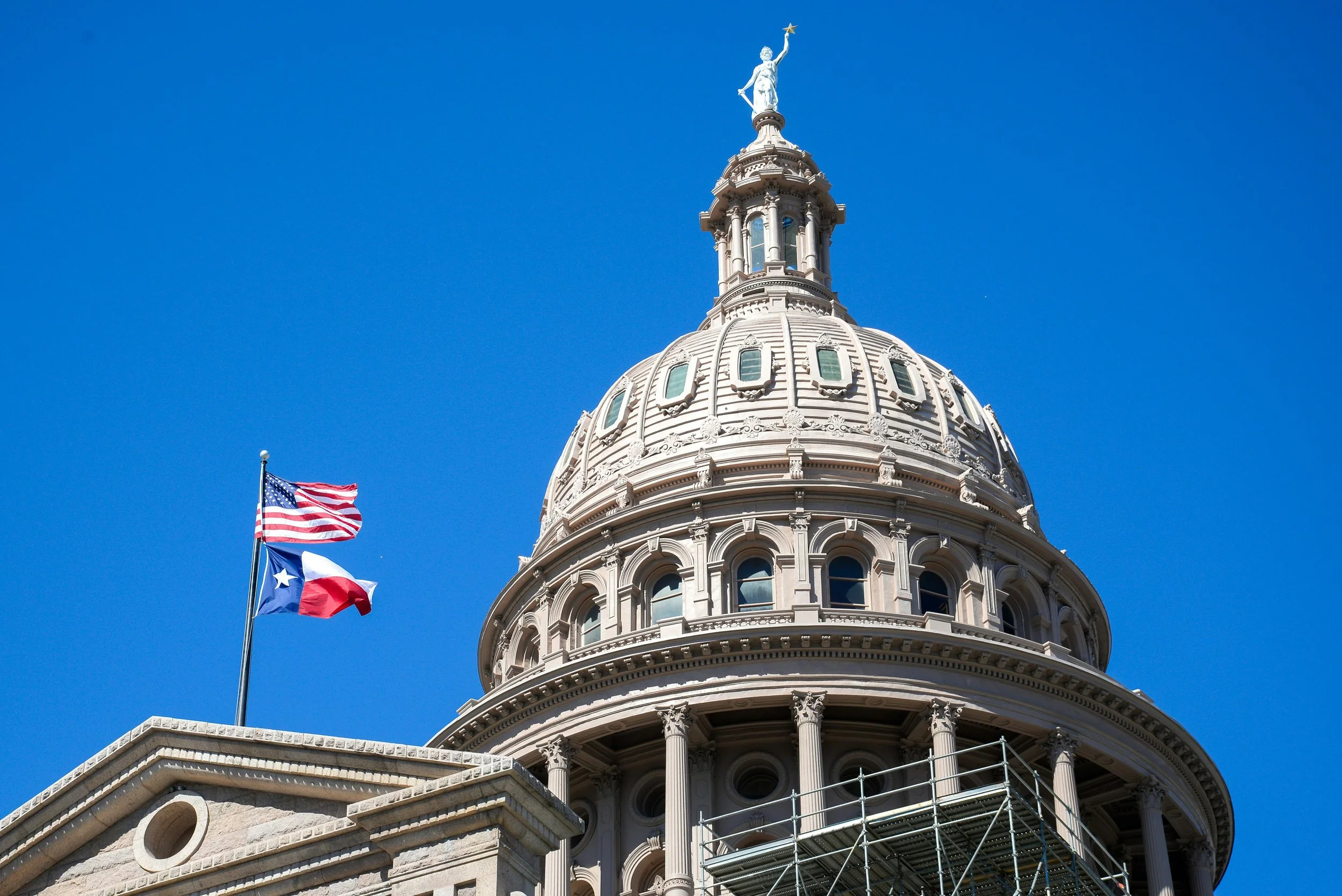
AUSTIN, Texas — When Governor Greg Abbott took the stage on the night of March 3, 2026, the result was never really in doubt. He had just won his fourth consecutive Republican primary with more than 80 percent of the vote, a commanding performance that sets him up to become the longest-serving governor in Texas history. But behind that lopsided margin was something the vote totals alone don't capture: a statewide field operation of unusual scale, run by Echo Canyon Consulting, that had knocked on more than 1.28 million doors across the state in the months leading up to primary night.
For a primary that Abbott was always expected to win, the sheer size of the ground game raises an obvious question: why? The answer lies in the governor's broader 2026 strategy. Abbott launched his reelection campaign in November 2025 under the slogan "Let's Roll," and from the very first night he made clear that winning his own race was only half the mission. The primary wasn't just a formality. It was a dry run for the real fight, and Echo Canyon was the firm tasked with building the machine.

The Strategic Picture: Why Run a General Election Field Program in a Primary
Abbott entered the 2026 cycle as one of the most popular governors in the country. Texas' economy ranks as the eighth largest in the world. He had signed landmark school choice legislation into law. He had a campaign war chest north of $90 million. And he had no serious primary challenger, facing a field of ten opponents with little name recognition or political experience.
But Abbott and his team were thinking past March.
That kind of operation doesn't materialize overnight. It has to be recruited, trained, tested, and refined. The primary gave Echo Canyon and the Abbott campaign a live environment to do exactly that, building a statewide canvassing apparatus that could be scaled and sharpened for the November general election against Democratic nominee Gina Hinojosa.
"You don't build a 600-person field operation in September and expect it to perform in November," said Jon Seaton, a consultant who worked closely with the Echo Canyon team. "The primary was the proving ground. Every turf cut, every data file, every regional structure that got tested in the spring is what the campaign will lean on in the fall."
Obstacles on the Ground: Scale, Staffing, and the Data Problem
Running a statewide door-knocking operation in Texas is not for the faint of heart. The state spans 268,000 square miles and its 254 counties include some of the most densely populated urban corridors in America alongside some of the most remote rural stretches in the Lower 48. Canvassers in El Paso and the Rio Grande Valley worked in punishing conditions, while teams in the Valley navigated communities where bilingual fluency wasn't optional. In rural East Texas, the distances between doors could stretch for miles, turning what might be a two-hour shift in a Dallas suburb into a full day's work.
Recruitment was its own battle. Staffing a 600-person operation in a tight labor market meant Echo Canyon had to constantly pipeline new hires while maintaining the training standards that Ryan Price, the firm's president, considers non-negotiable. Canvasser turnover is an industry-wide problem, and the physical demands of working turf across a state this size made retention especially difficult.
But perhaps the most persistent challenge was one that plagues every large-scale field program: data integrity. When hundreds of canvassers are recording voter contact information across thousands of turf cuts, irregularities inevitably creep in. Some are honest mistakes: a transposed address, a misheard response. Others are more troubling: fabricated contacts, inflated numbers, canvassers who mark doors as knocked when they never left the car.
"This is the problem that nobody in the industry likes to talk about," said Seaton. "Everyone knows the data quality issue exists. For decades, the only way to catch it was to have a trained analyst sit with a spreadsheet for weeks. By the time you found the problems, the damage to your models was already done."
For the Abbott campaign, where field data was feeding strategic decisions about resource allocation and informing the general election playbook being built in real time, bad data wasn't just an inconvenience. It was a potential liability.

Primary Night: Mission Accomplished, Phase One
Abbott cruised to his fourth GOP nomination with more than 80 percent of the vote, dispatching a field of ten challengers who had little traction against the incumbent. But Echo Canyon and the campaign team weren't measuring success by the primary margin. The real metrics were operational.
Could the firm recruit, train, and deploy 600-plus canvassers across a state as large as Texas? It could. Could the regional structure maintain cohesion and data quality at that scale? It did.
"Field data is only as good as the operation that collects it," said Matt Hilton, Echo Canyon's Vice President of Paid Field Programs, who played a key role in the Abbott operation. "We knew that if we could maintain data quality at scale during the primary, we'd have a head start that no opposing campaign could match in the general."
The data collected during the primary now forms the backbone of the Abbott campaign's general election targeting file, a proprietary dataset that supplements public polling and gives the campaign a granular, county-by-county picture of the electorate heading into the November fight against Hinojosa.
AstralisAI: The Innovation Born from the Field
The data integrity challenges that come with managing a canvassing operation of this size are what drove Echo Canyon to build what the firm now considers its most important innovation. In February 2026, just weeks before the primary, Echo Canyon launched AstralisAI, a proprietary, AI-driven canvasser auditing platform designed to do in seconds what used to take weeks of manual review.
Astralis integrates directly with voter contact platforms through CSV uploads and API connections. It analyzes core field metrics in real time, identifying patterns and irregularities across datasets. Entries that appear inconsistent are flagged for review. Clearly falsified records are isolated and removed. The result is a cleaner, more reliable file that gives campaign strategists confidence in the data they are using to make decisions.
"Astralis was born out of necessity," Price said. "When you're running a program across 48 counties with 600-plus canvassers, the old methods of quality control just can't keep up with the volume. We needed something that could audit in real time, at scale, without slowing down the operation."
The platform saw its first full deployment during the Abbott primary, and Echo Canyon says the results validated the concept. Irregularities that would have taken weeks to surface through traditional auditing methods were caught within hours, allowing regional managers to address problems before they contaminated the broader dataset.
Named for the Latin word meaning "revealed by the stars," Astralis represents the first tool of its kind in the political consulting industry. Echo Canyon believes it positions the firm at the forefront of how campaigns will verify and trust their field data going forward.
Looking Ahead: The General Election and Beyond
The primary is over, but for Echo Canyon and the Abbott campaign, the real work is just beginning. The organizational infrastructure tested during the primary is now being retooled for the November general election against Hinojosa. The field data collected at more than a million doors gives the campaign a head start in identifying the voters it needs to turn out.
Since June 2024, Echo Canyon has knocked on over 7 million doors across the country, and its client roster extends well beyond Texas. But the Abbott primary stands as a case study in what the firm does best: building large-scale, data-driven field operations that produce information campaigns can actually trust.
"A lot of firms can knock doors," said Price. "Not many can knock 1.28 million and stand behind the quality of every record. That's what we built in Texas, and with Astralis, that's what we're building for every campaign going forward."
For campaigns weighing their options for November and beyond, the Echo Canyon model offers a case study in what serious paid field infrastructure looks like, and a glimpse of where the industry is headed as AI-driven tools like Astralis make accountability not just possible, but automatic.
BY THE NUMBERS: ECHO CANYON'S ABBOTT FIELD OPERATION
1,288,150 Doors Knocked
About Echo Canyon Consulting: Echo Canyon Consulting is a full-service political consulting and public affairs firm based in Phoenix, AZ; Dallas, TX; and Alexandria, VA. The firm is renowned for its expertise in grassroots canvassing, with a record of knocking on nearly 7 million doors and contributing to victories in some of the nation's most high-profile races. For more information, visit echocanyonconsulting.com.